Closing Day: What to Expect When Buying a Home in Northeast Florida

You’ve been given the clear to close, and that means you can finally see the finish line. You’re so close. Woohoo!!!!
The next step is wiring the remaining funds you’ll need for closing.
Your lender will send you a Closing Disclosure, which is where you’ll find the amount you need to wire to the title company. This document is important because it breaks down all of the costs associated with your purchase.
You’ll see things like:
- Your closing costs
- Who is paying which fees
- Your interest rate
- Your monthly principal and interest payment
- Property taxes
- Homeowner’s insurance
- Escrow information
- Any funds being collected at closing
You may notice two different rates listed on the Closing Disclosure. One will be your actual interest rate, which should match what you agreed to with your lender. The other will be the APR, which is usually a little higher because it factors in certain closing costs and fees associated with the loan.
If you see anything that doesn’t look right, your agent can help point you in the right direction, but always discuss questions about your loan directly with your lender.
Once you’ve reviewed everything and you’re comfortable with the numbers, it’s time to send your wire to the title company.
Remember what we talked about earlier regarding wire fraud. Always verify wiring instructions directly with the title company before sending funds. Even if you’ve received wiring instructions before, it never hurts to call and confirm them.
The Final Walk Through
Once the funds are on the way, we’ll schedule your final walk through.
The purpose of the final walk through is not to go looking for new issues with the home. Instead, we’re making sure the property is in the condition agreed upon in the contract.
We’re checking that agreed-upon repairs were completed, appliances that were supposed to stay are still there, and any other items negotiated as part of the sale remain with the property.
For example, maybe the seller agreed to leave certain pool equipment, a refrigerator, or items stored in a shed. This is our opportunity to verify that everything is as expected.
One thing that surprises some buyers is that the seller may not be completely moved out yet.
That is not necessarily a problem.
The seller is required to be out by closing, but if we’re doing the walk through before closing, it’s normal to see boxes packed up, furniture being moved, or final touch-ups being completed around the house.
What would concern me is if we’re only a couple of hours away from closing and it looks like no progress has been made toward moving out. That’s when we would start asking questions and figuring out what the plan is.
In most situations, though, everything works out just fine.
The home should be what we call “broom swept.” That doesn’t mean it’s going to look like a professional cleaning crew just left. It simply means the seller’s belongings should be removed and the home should be left in reasonably clean condition.
This is one reason I like scheduling the final walk through the day before closing whenever possible. It gives us time to address any concerns and confirm that everything will be ready before we head to the closing table.
A Real-Life Example
I once had a seller who had moved out of state and still had some belongings left in the home.
The property had belonged to her and her mother, and after her mother passed away, she struggled emotionally with going through the remaining items.
The buyers were very clear that they wanted everything removed before closing and did not want to proceed until the house was empty.
After speaking with the seller and getting her permission, I helped clear out the remaining items so we could keep the transaction moving forward.
It wasn’t a huge amount of stuff, mostly boxes and personal belongings in the garage, but it was enough that the buyers were concerned.
Situations like this do happen from time to time, but they’re usually solvable. Most issues that come up during a final walk through are identified before closing and can often be corrected without delaying the transaction.
The important thing is not to panic if you see a few loose ends during the walk through. Your agent is there to help work through any issues and make sure you’re protected before closing day.
What to Bring to Closing
By the time closing day arrives, you’ve made it through inspections, appraisal, underwriting, and all the other hurdles that come with buying a home.
Now it’s finally time to sign the paperwork and get the keys.
One of the most important things you’ll need to bring is a valid government-issued photo ID, usually your driver’s license.
You’ll also want to confirm that the title company has received your wire transfer before heading to closing. If the funds haven’t arrived, the transaction cannot be completed, so it’s always a good idea to verify that everything has been received and is ready to go.
What Happens at the Closing Table?
Many buyers are surprised to learn that they usually have more paperwork to sign than the seller.
Years ago, it was common for buyers and sellers to sit together at the same closing table and sign everything at the same time. When COVID came along, a lot of that changed.
Today, every closing is a little different.
Sometimes buyers and sellers still sign together. Other times the seller signs first and leaves before the buyer arrives. In many cases, the buyer signs separately with their agent while the seller signs at a different time.
Whatever the setup, the process is generally the same. Usually closing takes only about an hour, at most.
The title company or closing attorney will guide you through the documents that need to be signed. Don’t worry, they’re not going to read every page line by line.
Most of the paperwork is standard loan and closing documentation that lenders use every day. The details are specific to your transaction, such as your name, loan amount, interest rate, and terms, but the documents themselves are very common.
That said, if you have questions, ask them.
Never feel rushed or uncomfortable. This is a major purchase, and you have every right to stop and ask for clarification on anything you don’t understand.
The signing process itself usually doesn’t take very long.
Once everything is signed, the paperwork is sent back to the lender for final review. In many cases, the lender already has the funds ready to go and is simply waiting for the signed documents.
Once the lender gives final authorization and the funds are released, the transaction is officially complete.
The Best Part: Getting the Keys
Once the funding is complete, you’re officially a homeowner.
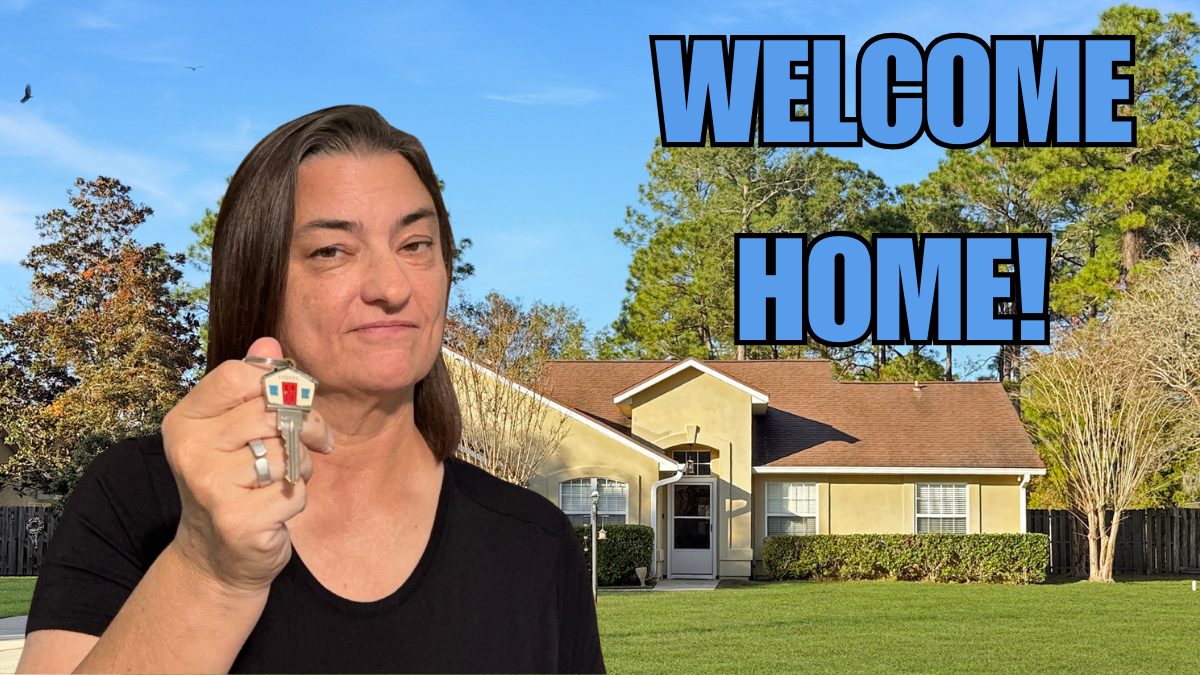
You get the keys. You get to move in. You get to start making memories in your new home.
This is the exciting part. After all the paperwork, inspections, waiting, and planning, you finally get to enjoy the home you’ve worked so hard to purchase.
And then the real work begins because now you have to move.
You’ll spend days carrying boxes, rearranging furniture, and figuring out where everything goes. By the time you’re done, you’ll probably tell yourself that you’re never moving again because your entire body hurts. Or maybe that’s just me. 😂
Either way, you’ve made it to the finish line. You’re now a home owner.
Congratulations on your new home!!!
Maybe you’re new here and just found my blog. Here is Step 1 in the home buying process. Check Your Financial Starting Point Before Buying A Home In Jacksonville Florida.
Knowing what the mortgage rates are, is an important piece of the puzzle. Check out Mortgage Daily News for the latest interest rates.
If you have questions or ready to get to the closing table, Message me or schedule a quick call to get started… pam@pamgraham.com Call/Text: 904-910-3516

I’m Pam Graham, a Northeast Florida real estate consultant, which includes Jacksonville, Clay & St John’s Counties. I break down the market in layman’s terms so you can make smart decisions—whether you’re buying, selling, or just keeping an eye on what’s happening.
Call/Text 904-910-3516
Email: pam@pamgraham.com